Taste of Tirana: A Street-to-Table Journey Through Albania’s Beating Heart
Ever wondered where bold flavors meet everyday life? Tirana isn’t just the capital of Albania—it’s a flavor lab hidden in plain sight. I wandered its sunlit streets, following the scent of grilled meat and fresh herbs, and found something rare: food that feels like home, even if you’ve never been here. This isn’t fine dining for influencers; it’s real, loud, and unapologetically delicious. The city pulses with a rhythm built on shared meals, simmering stews, and the clink of espresso cups on marble tables. In Tirana, eating is not an event—it’s a way of being. From the first bite of warm byrek at dawn to late-night laughter over grilled qebapa, every meal tells a story of resilience, generosity, and deep-rooted tradition. This is a journey not just through taste, but through the soul of a city learning to celebrate itself.
First Bites: Arriving in Tirana with Hunger and Curiosity
Stepping off the bus or taxi into Tirana’s morning light feels like entering a city already deep in conversation. The buildings, painted in peach, mint, and cobalt, stand like cheerful sentinels along wide boulevards. But it’s the smells that truly announce your arrival—charred lamb fat sizzling on open grills, the earthy bitterness of Turkish coffee brewing in small copper cezves, and the buttery sweetness of fresh pastries pulled from wood-fired ovens. Sidewalks buzz with activity: grandmothers in floral scarves balancing grocery bags, students hunched over laptops at outdoor cafés, and cooks flipping flatbreads behind glass counters. Within minutes, hunger sets in—not the kind that demands a meal, but the kind that insists on discovery.
What strikes visitors most is how seamlessly food integrates into the city’s daily fabric. There are no designated “dining hours” in Tirana; meals unfold naturally, stretching from early morning coffee to midnight snacks. A man in a work shirt might be eating grilled peppers from a paper cone at 10 a.m., while a group of women share a platter of feta and olives at 4 p.m. as if it were the most natural pause in the day. This fluidity reflects a culture where nourishment is not rushed or hidden away but lived openly, joyfully. Dining is not a luxury—it’s a rhythm, as essential as breathing.
For the newcomer, this immediacy is both disarming and inviting. There’s no need to research the “best” restaurant or wait for evening to begin the culinary journey. The first bite can come from a street vendor near the city center, where a wrinkled woman hands over a golden byrek wrapped in parchment paper with a smile that says, “Welcome.” That moment—warm pastry in hand, surrounded by animated chatter in a language you don’t yet understand—becomes the true entry point into Tirana. It’s a city that feeds you before it speaks to you, and in doing so, dissolves the distance between stranger and local.
Beyond the Menu: Understanding Albanian Food Identity
To appreciate Tirana’s food scene, one must first understand the roots of Albanian cuisine—a tapestry woven from geography, history, and a deep respect for seasonal ingredients. Nestled between the Adriatic Sea and the Balkan Mountains, Albania enjoys a rich agricultural bounty. The Mediterranean climate nurtures olive groves, vineyards, and orchards, while highland pastures provide grazing for free-range sheep and goats. This natural diversity is reflected on every plate, where freshness isn’t a trend—it’s a necessity.
Centuries of Ottoman rule left an indelible mark on the nation’s palate. Dishes like sarma (cabbage rolls stuffed with spiced meat and rice), baklava, and pilaf are still staples, prepared with care in homes and small eateries alike. Yet Albanian food is not merely a relic of empire. It has evolved into something distinctly its own—rustic, honest, and deeply personal. Unlike the polished presentations of modern fusion cuisine, traditional Albanian meals prioritize substance over spectacle. A meal might consist of grilled peppers, a bowl of thick yogurt, and a hunk of crusty bread, but each element carries the weight of generations.
What defines authenticity here is not theatrical presentation or exotic ingredients, but the presence of family recipes passed down through decades. Grandmothers still roll dough by hand, mothers stir pots with instinctive precision, and children learn to season by taste, not measurement. In Tirana, “traditional” doesn’t mean frozen in time—it means alive, adaptable, and shared. The city’s food identity is not preserved behind glass; it’s served on chipped plates in family kitchens, where the recipe is less important than the act of gathering.
Seasonality plays a crucial role in this culinary philosophy. Menus change not because of trends, but because the garden yields different crops in spring versus autumn. In May, you’ll find wild greens sautéed with eggs; in August, plump tomatoes drenched in olive oil and oregano; in November, slow-cooked beans with smoked meat. This connection to the land fosters a deep respect for ingredients, where nothing is wasted and everything has its time. For the traveler, this means every visit offers a slightly different taste of Albania—one that aligns not with a calendar of promotions, but with the natural rhythm of the earth.
The Art of the Albanian Breakfast: A Morning Ritual Worth Waking For
In Tirana, mornings begin not with alarms, but with aromas. The scent of baking dough and strong coffee drifts through open windows, pulling residents from their beds with the promise of warmth and connection. Breakfast here is not a hurried affair squeezed between responsibilities. It is a ritual—a deliberate pause in the day when family, neighbors, and even strangers come together over simple, satisfying food.
The cornerstone of the Albanian morning table is byrek, a flaky, layered pastry typically filled with a mixture of feta-style cheese, spinach, or minced meat. Baked in large circular trays, it emerges from the oven golden and crackling, its thin sheets of dough separating with each bite. Many families don’t bake it at home; instead, they visit the local furn, a communal wood-fired oven often tucked into a quiet alley or village square. Women arrive with trays of prepared dough, handing them to the furnace keeper who slides them into the glowing chamber with a long wooden peel. The process is slow, communal, and deeply rooted in tradition—no timers, no recipes, just generations of knowing when the byrek is done by the color of its crust.
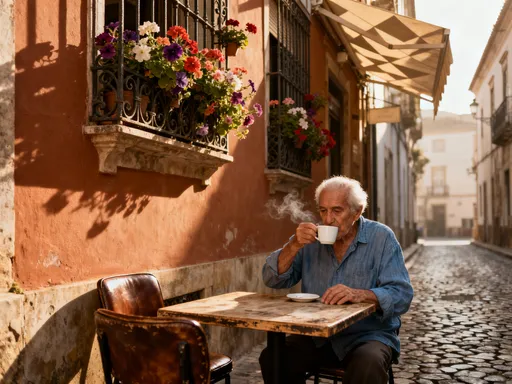
Alongside byrek, the breakfast table is often set with thick yogurt, sometimes drizzled with wildflower honey, fresh tomatoes still warm from the sun, and homemade jams made from figs, quince, or rose petals. A pot of strong Turkish coffee simmers nearby, its rich, almost syrupy brew served in tiny cups with the grounds settling at the bottom. Unlike the to-go culture of many Western cities, Albanians rarely eat breakfast alone. Even in the city, people gather at small sidewalk cafés, where marble-topped tables are crowded with neighbors catching up on news, sharing pastries, and watching the day unfold.
What makes this morning ritual so powerful is its quiet significance. There’s no fanfare, no Instagrammable plating—just food prepared with care and shared with presence. For the visitor, joining a local for breakfast is one of the most intimate ways to experience Tirana. It’s a moment of stillness in a bustling city, where time slows just enough to savor a flaky bite of byrek and the sound of laughter rising above the clink of coffee cups. In that simple act of breaking bread—or pastry—barriers dissolve, and belonging begins.
Street Food Pulse: Where Flavor Walks the Pavement
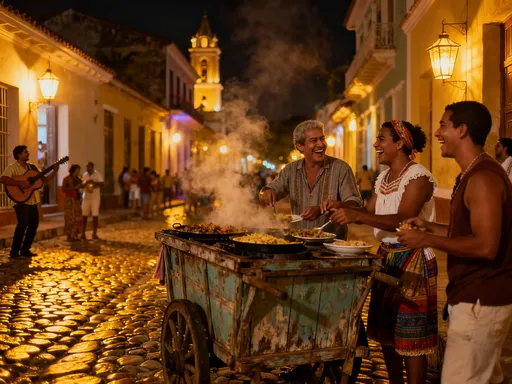
If breakfast is the quiet heartbeat of Tirana, then street food is its electric pulse. As the city wakes, food carts appear like mushrooms after rain—on corners, near markets, outside office buildings. These are not elaborate food trucks with neon signs and QR code menus, but modest stalls run by cooks who know their craft inside and out. The menu is short, the ingredients fresh, and the service fast—but never impersonal.
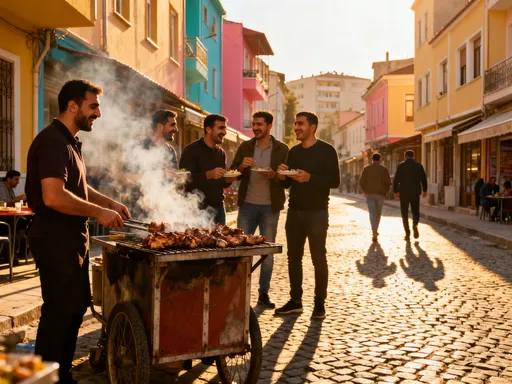
The star of Tirana’s street fare is the qebapa, a slender grilled sausage made from a blend of beef and lamb, seasoned simply with salt, pepper, and garlic. Served in a flatbread pocket with raw onions and a squeeze of lemon, it’s a handheld meal that packs a punch of smoky, savory flavor. Vendors cook them over open charcoal grills, turning the sausages with practiced hands, their faces glowing in the firelight. The scent alone draws people in—office workers on lunch break, students between classes, parents walking children to school. Many eat standing up, balancing the warm parcel in one hand, their other hand gesturing mid-conversation. There’s no shame in eating on the go; in fact, it’s part of the charm.
But qebapa is just the beginning. Stuffed peppers—filled with rice, herbs, and sometimes ground meat—are another favorite, often sold alongside fresh pomegranate juice pressed on the spot. The deep ruby liquid, tart and refreshing, is poured into plastic cups and handed over with a straw. In the summer, vendors sell slices of watermelon so cold they fog the air, while in winter, you’ll find steaming cups of tarator, a cold yogurt and cucumber soup served in warmer months but sometimes offered year-round as a refreshing contrast to rich meats.
Some travelers hesitate at the idea of street food, concerned about hygiene or unfamiliar preparation. But in Tirana, cleanliness is not an afterthought—it’s a point of pride. Most vendors keep their stations spotless, washing hands frequently and covering ingredients when not in use. The turnover is high, meaning food is prepared fresh throughout the day, not sitting out for hours. Observing the regulars—the way they nod to the cook, call out their usual order, or joke about the weather—offers its own reassurance. When locals trust a stall, so can you.
More than just sustenance, street food in Tirana is a social connector. It’s where friendships are strengthened over shared bites, where strangers exchange smiles over a crowded cart, and where the city’s energy is most palpable. To eat street food here is to participate in the daily rhythm of life, to become, if only for a moment, part of the flow.
From Family Kitchens to Hidden Courtyards: Off-the-Beaten-Path Dining
Beyond the bustling streets and sidewalk stalls, some of Tirana’s most memorable meals happen in places you’d easily miss. Tucked behind unmarked doors, down narrow alleyways, or hidden in leafy courtyards, small family-run eateries offer an experience that transcends dining—it becomes hospitality in its purest form. These are not restaurants in the traditional sense. They have no websites, no reservations, and often no printed menus. Instead, they operate on word of mouth, tradition, and the generosity of hosts who treat every guest like an honored cousin.
Entering one of these hidden gems feels like being invited into a home. The tables are close together, encouraging conversation. The walls might be lined with family photos or vintage wine bottles. The host—often a mother or grandmother—greets you at the door, ushering you to a seat with a warm smile and a question: “Have you eaten well today?” The meal begins not with a menu, but with a tour of the kitchen, where pots simmer with stews made from yesterday’s bones and fresh herbs picked that morning. You might be offered a taste of something still in the pot, a spoonful of lamb with rosemary that melts on the tongue.
These meals are often served family-style: platters of grilled vegetables, bowls of bean stew, fresh bread still warm from the oven, and cheeses made from local sheep’s milk. The pace is slow, unhurried. There is no rush to clear the table or push for the check. Instead, time stretches, filled with stories, laughter, and repeated offers of more food. “You must try the peppers,” the host insists, placing another dish before you. “My sister grew these in her garden.” In these moments, food becomes a language of care, a way of saying, “You matter.”
What sets these experiences apart is their authenticity. There’s no performance, no attempt to cater to tourist expectations. The food is what the family eats, prepared the way they’ve always prepared it. A dish might be named after a village, a season, or a memory. The host might tell you how her mother taught her to roll dough on a winter afternoon, or how this stew was served at her son’s wedding. These are not stories crafted for visitors—they are lived truths, shared because they want you to understand, not just consume.
For the traveler, especially one who values connection over convenience, these hidden dining spots offer a rare gift: the chance to be seen, welcomed, and fed from the heart. In a world where many meals are transactional, these moments remind us that food, at its best, is an act of love.
Blending Old and New: How Tirana’s Restaurants Are Evolving
While tradition remains the soul of Tirana’s food culture, a quiet evolution is underway. Across the city, a new generation of chefs, many of whom studied or lived abroad, are reimagining Albanian cuisine with fresh eyes and open minds. This is not a rejection of the past, but a respectful dialogue with it—a way of honoring heritage while embracing change.
In newer cafés and restaurants, you’ll find craft coffee brewed with precision, avocado toast served alongside byrek, and cocktails infused with local herbs like mountain mint and thyme. Menus might list “slow-roasted lamb with smoked eggplant purée” instead of simply “grilled meat,” and presentation is more deliberate, though never fussy. These spaces often attract young professionals, returnees, and curious travelers, creating a bridge between old and new ways of eating.
What makes this transformation remarkable is its balance. Unlike cities where modernization erases tradition, Tirana’s dining scene is expanding, not replacing. A grandmother’s stew still simmers in a courtyard kitchen while, just blocks away, a young chef plates a deconstructed version with edible flowers and pomegranate reduction. Both are valid. Both are loved. The city doesn’t demand a choice between authenticity and innovation—it welcomes both.
This blending is also visible in the rise of farm-to-table initiatives and seasonal tasting menus in select establishments. Some restaurants now partner with local farmers, highlighting regional specialties from different parts of Albania—seafood from the Ionian coast, cheeses from the highlands, honey from beehives in the hills. These efforts not only support local economies but also deepen the narrative of Albanian food as diverse and dynamic.
Yet even in these modern spaces, the spirit of hospitality remains unchanged. Service is warm, unhurried. Hosts still ask if you’ve eaten well. The clink of coffee cups still fills the air. The evolution of Tirana’s food scene is not about becoming something else—it’s about becoming more fully itself, embracing both its roots and its possibilities.
Dining as Discovery: Why Food Is the Best Way to Know Tirana
In the end, to understand Tirana is to eat within it—not as a spectator, but as a participant. Every meal, whether at a street cart, a family table, or a modern bistro, is an invitation to connect. Food here is not just sustenance; it is memory, identity, and generosity made tangible. It is the language through which Albanians express care, pride, and resilience.
When you accept a plate of warm byrek from a stranger, when you sit at a shared table and laugh over spilled yogurt, when a host insists you take one more bite “for the road,” you are not just tasting flavors—you are experiencing a culture that values presence over perfection, people over profit, and connection over convenience. These moments, small and unscripted, are the true heart of travel.
Tirana teaches a simple but profound lesson: that the best way to know a place is to let it feed you. Not just your body, but your spirit. In a world that often feels rushed and fragmented, the city offers a different pace—one measured in shared meals, slow conversations, and the warmth of a well-set table.
So to every traveler, especially those seeking meaning beyond the postcard view, here is the invitation: slow down. Sit down. Accept the coffee, try the qebapa, ask about the recipe. Let the city unfold not through sights alone, but through tastes, smells, and shared laughter. Let Tirana feed you—fully, deeply, and without hurry. Because in the end, the meals you remember are not the ones you planned, but the ones that found you when you were ready to belong.